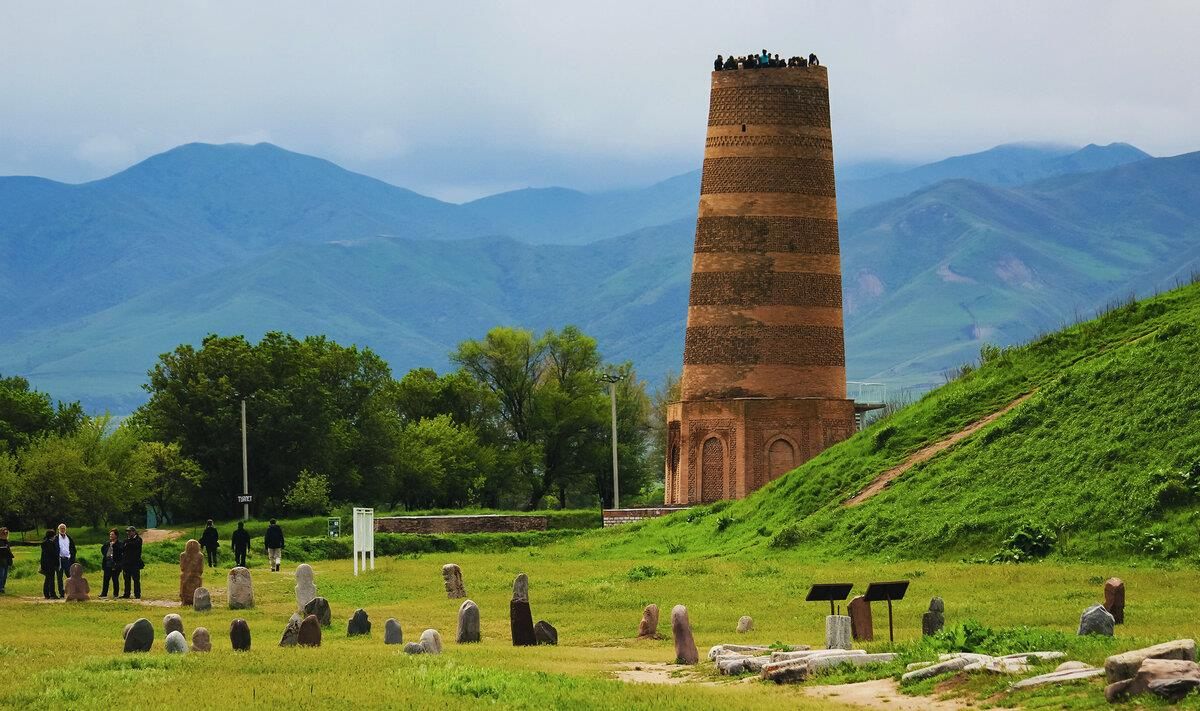
A narrow spiral staircase runs up the inside in complete darkness; the caretaker hands you a torch. The climb takes three minutes and is quieter than anything else on the site. From the top you can see the whole valley to the range.
Beside the tower is a field of balbals — stone figures that Turkic nomads set over burials between the sixth and tenth centuries. They were brought here from across the valley to save them from the tractors, and they stand in rows with quite different faces: some almost portraits, some sketched with two lines. Each holds a vessel in its right hand.
The small museum holds ceramics, coins, jewellery and grave markers from the site — including stones cut with Nestorian crosses and Syriac inscriptions. A Christian community lived comfortably in a Muslim capital. On the Silk Road that was not an exception; it was the norm.