Two places, one day
This tour puts the two halves of northern Kyrgyzstan side by side: a mountain gorge with a waterfall in it, and the oldest standing building in the Chui valley. Together they take six to seven hours, all of it on good roads.
Kegety waterfall
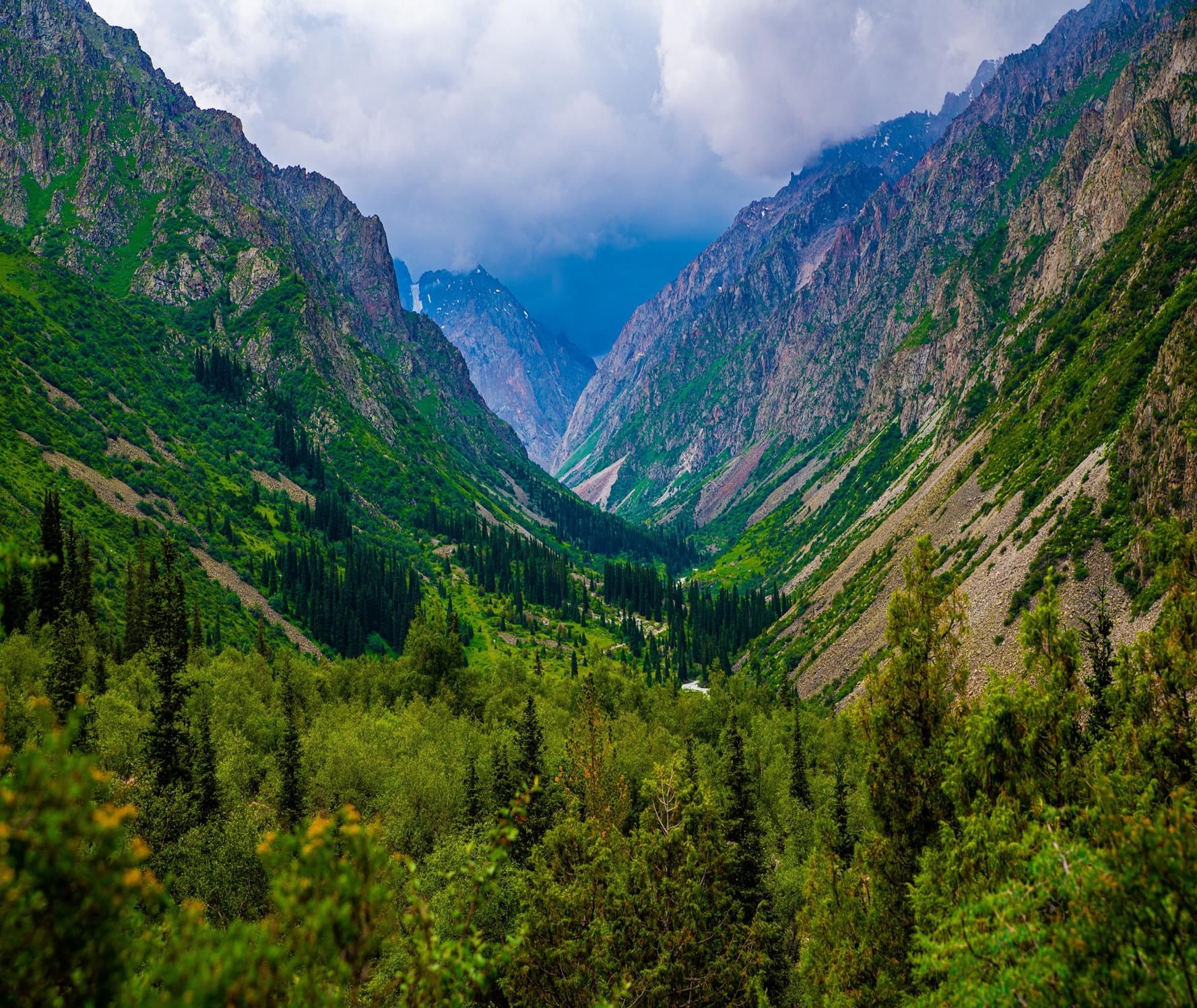
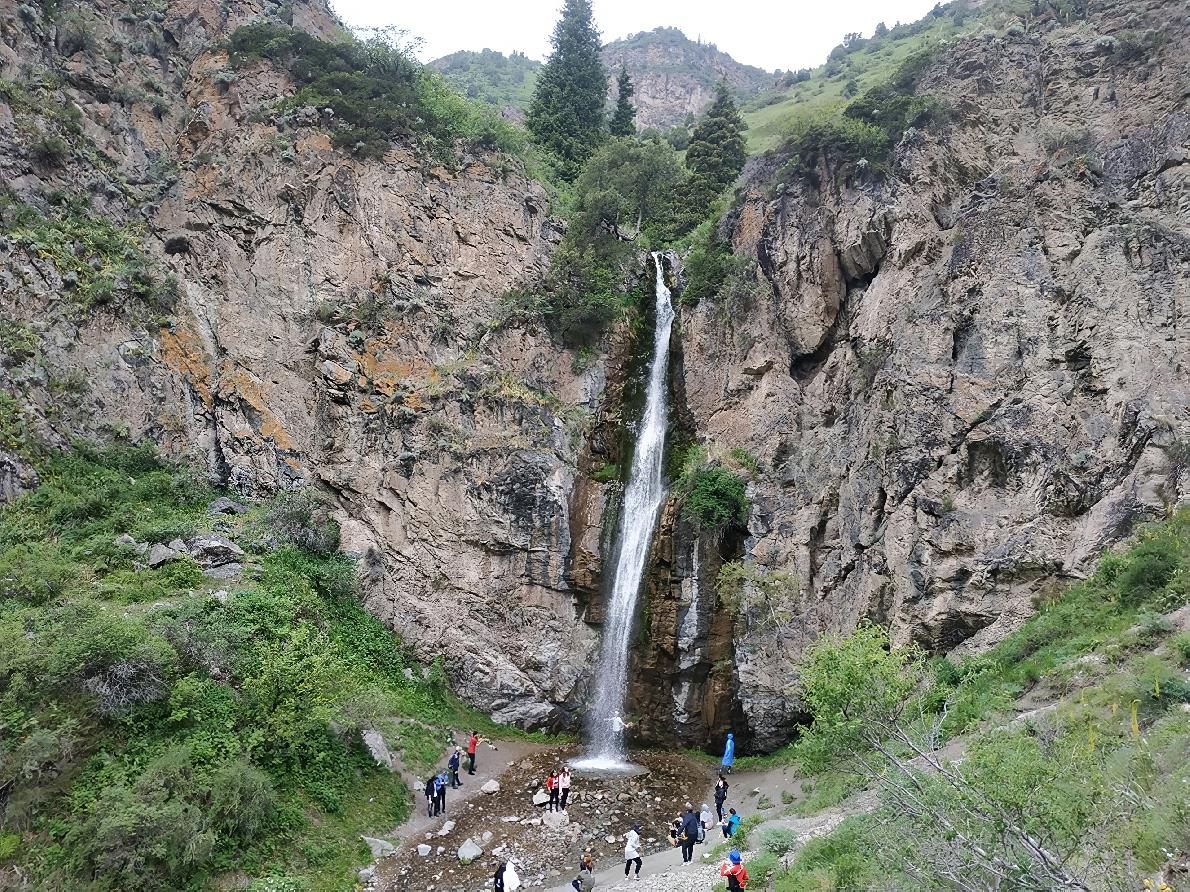
The Kegety waterfall is a well-known natural landmark set in the heart of the Kegety gorge, about 90 kilometres from Bishkek. At an impressive fifteen metres it falls year-round, which is unusual here — most falls in these mountains dry to a trickle by late summer. The approach from the road is short and the spray reaches you well before you get there.
Burana Tower
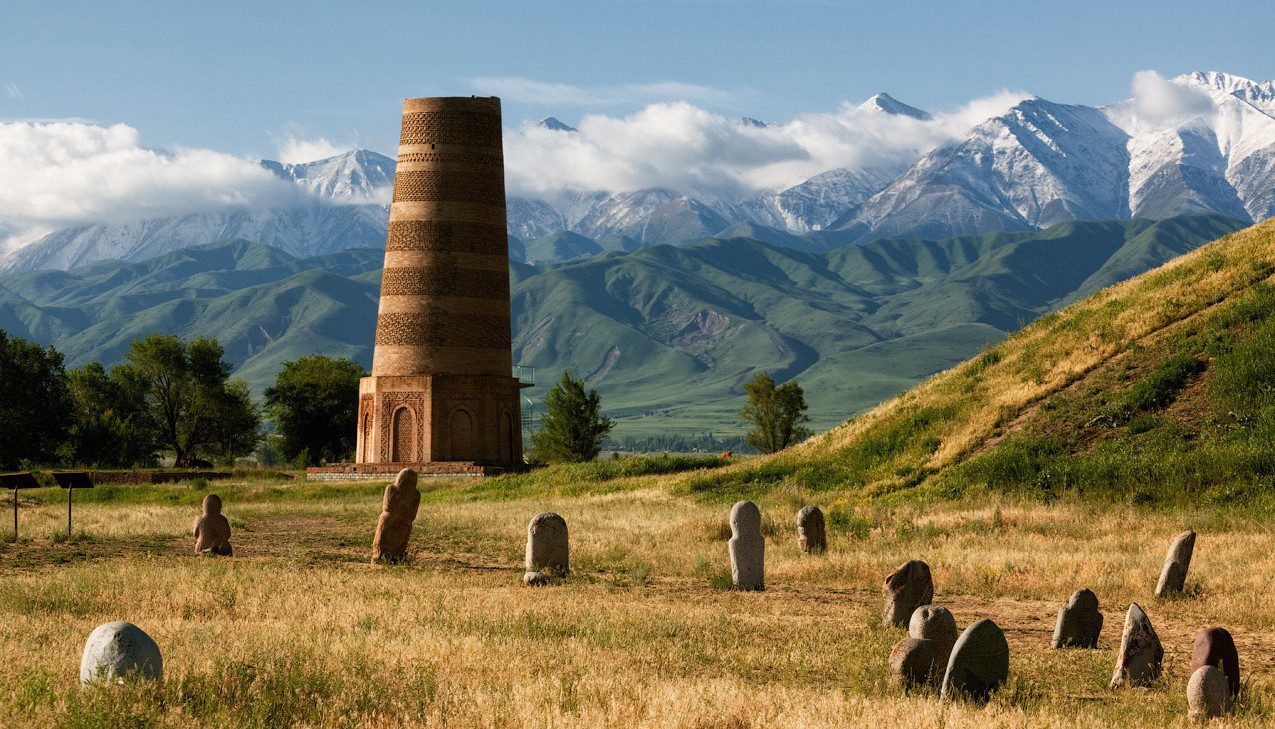
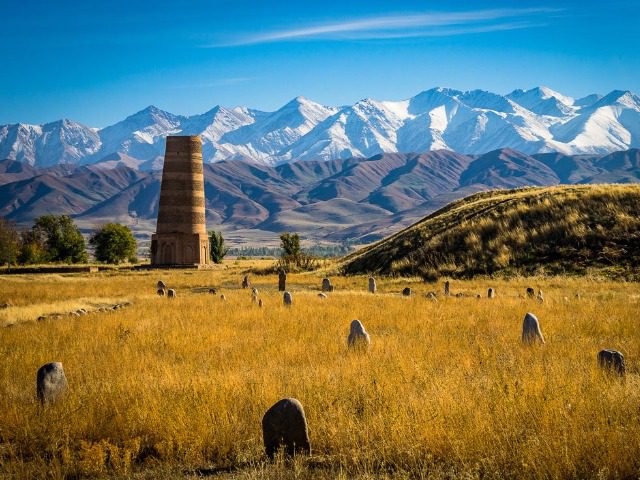
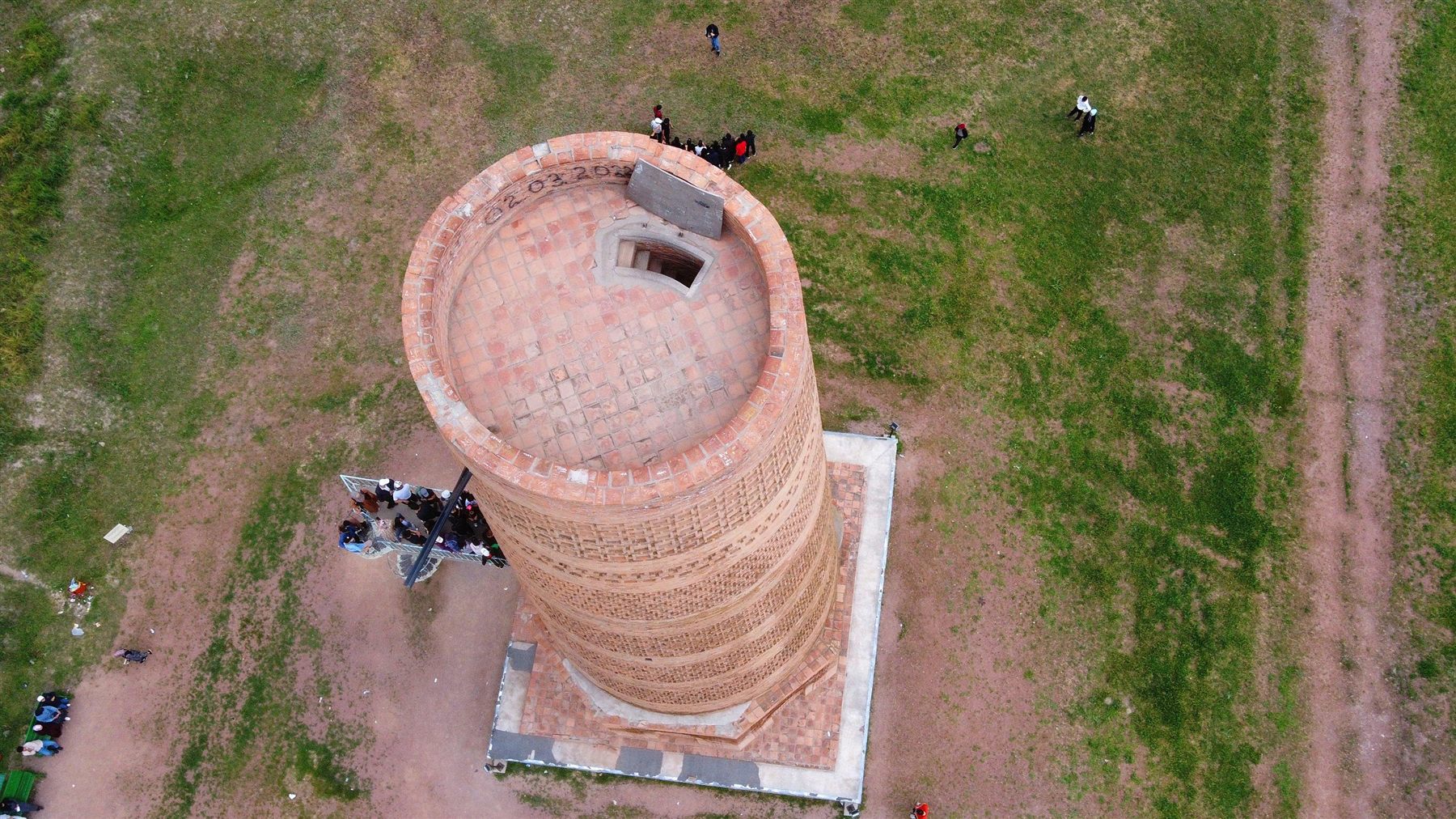
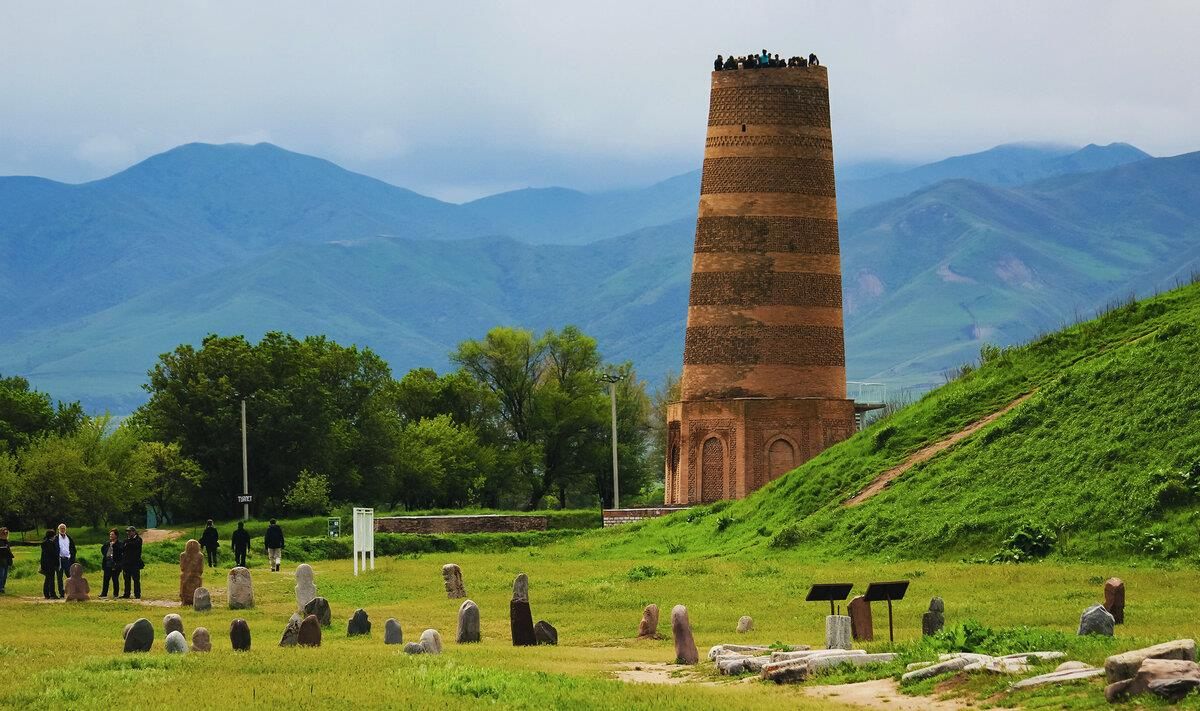
Burana is a minaret of the 9th–11th centuries, built under the Karakhanid state, standing in the Chui valley 80 km from Bishkek and 12 km south-west of the town of Tokmok, on the left bank of the Chu river. It is one of the oldest burnt-brick minarets anywhere in Central Asia, and it is protected by the state as a monument of cultural and historical heritage.
What makes it remarkable is what is missing. The minaret once belonged to Balasagun, the Karakhanid capital and a major stop on the northern branch of the Silk Road — a city of tens of thousands of people. Today there is a tower, a field of stone grave markers gathered in from the surrounding valley, a small museum, and cultivated fields in every direction. Nothing else survives.
You can climb the tower. The staircase inside is narrow, steep and completely dark; the caretaker hands you a torch at the bottom. It takes about three minutes, and the view from the top runs the length of the valley to the range.
When to come
All year. The waterfall runs in every season, and the tower standing in a snow-covered valley in January is arguably a better photograph than the summer version. The road is cleared through winter.
If the history is what draws you, our journal has a longer piece on what remains of Balasagun.